
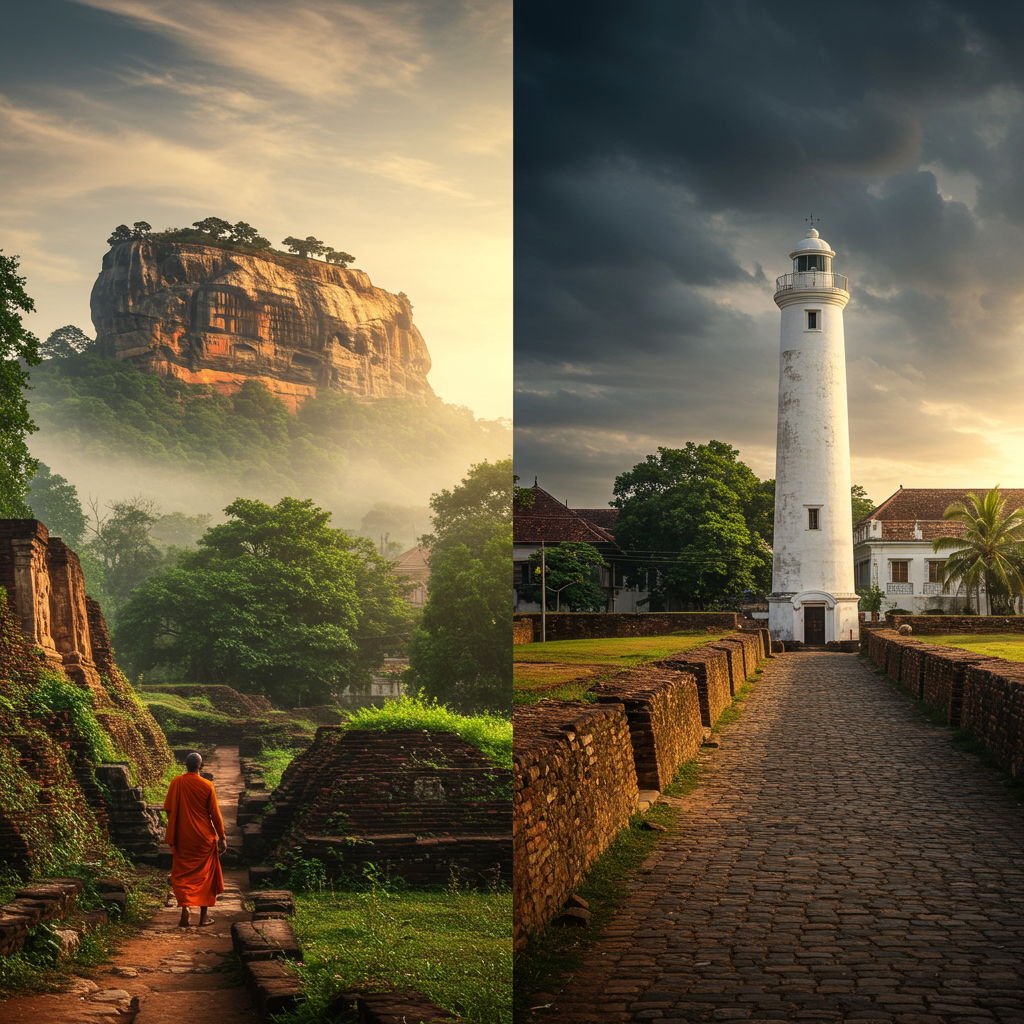
Echoes of Ancient Kingdoms
Your historical odyssey begins in the Cultural Triangle, home to some of Sri Lanka’s most breathtaking ancient wonders. The sacred city of Anuradhapura, dating back to the 4th century BC, served as the island’s first ancient capital. Here, colossal stupas like the Jetavanaramaya and Ruwanwelisaya pierce the sky, testaments to remarkable engineering and devotion. Don’t miss the Sri Maha Bodhi, a sacred fig tree believed to be a sapling from the original Bodhi tree under which Buddha attained enlightenment.
Following Anuradhapura‘s decline, Polonnaruwa rose to prominence as the medieval capital from the 11th to 13th centuries. Its well-preserved ruins, including the royal palace, audience halls, and the iconic Gal Vihara with its four magnificent rock-cut Buddha statues, offer a more concentrated and refined glimpse into ancient Sri Lankan artistry and urban planning.
Perhaps the most awe-inspiring historical site is the Sigiriya Rock Fortress. This UNESCO World Heritage site is an ancient rock palace and fortress built atop a massive column of rock. Ascend its thrilling staircase to marvel at the exquisite frescoes of the “Sigiriya Maidens” and the formidable Lion Gate, before reaching the summit for panoramic views of the surrounding jungle. The complex demonstrates incredible hydraulic engineering with its sophisticated water gardens.
Nearby, the Dambulla Cave Temple complex, another UNESCO site, offers another spiritual and artistic marvel. Five intricately decorated caves house a spectacular collection of Buddha statues and vibrant frescoes, some dating back to the 1st century BC, making it the best-preserved cave temple complex in Sri Lanka.
Colonial Legacies and Enduring Charm
Beyond the ancient kingdoms, Sri Lanka’s strategic position in the Indian Ocean meant it became a prized possession for various European colonial powers – the Portuguese, the Dutch, and finally the British. Each left an indelible mark on the island’s architecture, culture, and cuisine.
The fortified city of Galle, with its stunning Galle Fort, is a UNESCO World Heritage site and a prime example of Dutch colonial architecture. Wander through its narrow cobblestone streets, admire the beautifully preserved colonial buildings, visit the lighthouse, and walk along the ramparts, feeling as though you’ve stepped back in time. The blend of European architectural style with South Asian traditions is simply captivating.
Kandy, the last royal capital of Sri Lanka, offers a different historical flavour. While it eventually fell to the British, its resistance shaped much of the island’s colonial narrative. The sacred Temple of the Tooth Relic (Sri Dalada Maligawa), housing a relic of the Buddha’s tooth, is the spiritual heart of the city and a significant cultural landmark. The city itself is nestled amidst hills, retaining a charm distinct from the coastal forts.
Even the bustling capital of Colombo retains vestiges of its colonial past. Explore the Fort district to see impressive British-era buildings like the Old Parliament and various grand hotels. The city’s architecture tells a story of evolving influences, from Portuguese churches to Dutch warehouses and stately British administrative buildings.
For a distinctly British colonial experience, head to Nuwara Eliya. Known as ‘Little England’, this hill station is famous for its tea plantations and charming colonial bungalows, golf courses, and meticulously manicured gardens. It’s a nostalgic journey back to the days of the British Raj, complete with cool misty weather and picturesque landscapes.
From the towering stupas of Anuradhapura to the ramparts of Galle Fort, Sri Lanka offers a profound and varied journey through its rich past. Every corner of the island holds a story, waiting to be uncovered by the discerning history buff.