
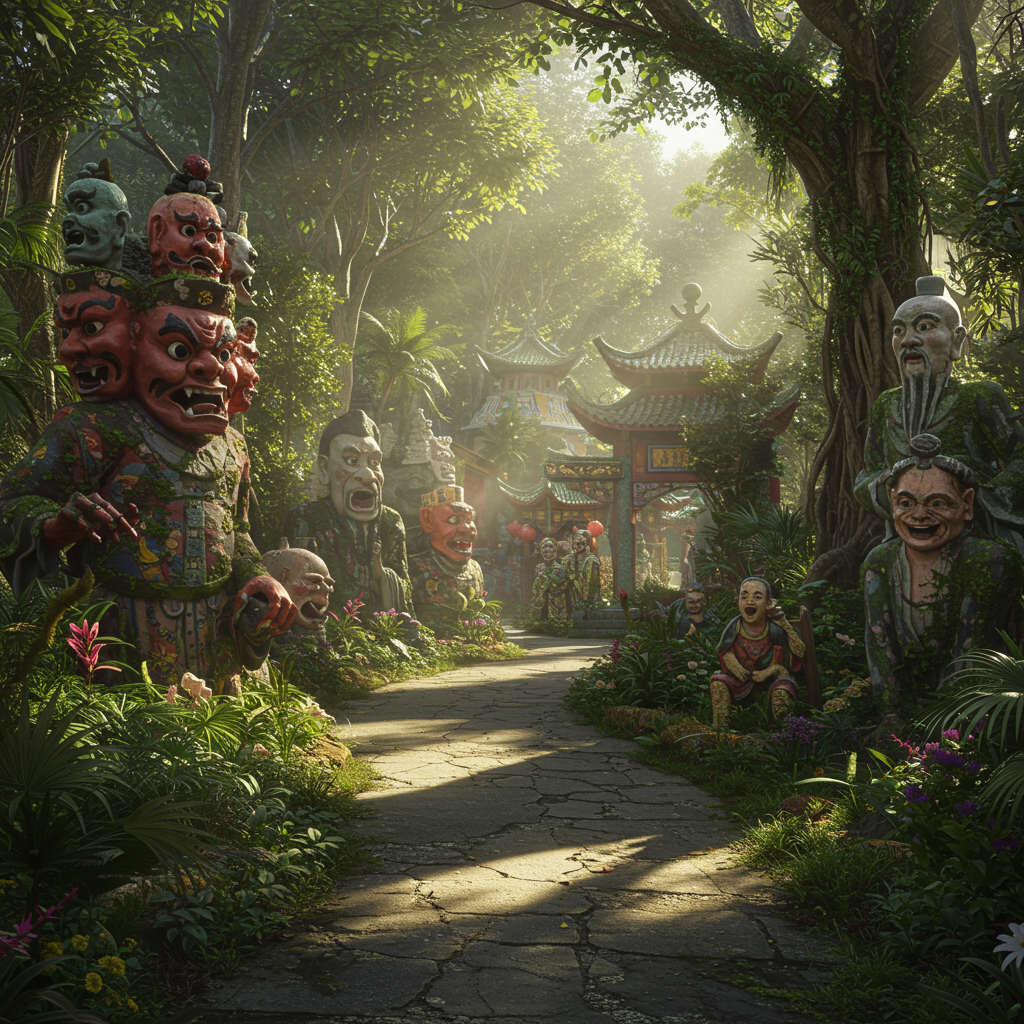
Step away from the glitz of Singapore‘s modern attractions and you’ll stumble upon a truly singular experience: Haw Par Villa. This eccentric theme park, built in 1937, offers a peculiar blend of mythology, morality, and mayhem, making it an unmissable stop for those seeking something genuinely offbeat.
Originally known as Tiger Balm Gardens, it was created by the Aw brothers, philanthropists and founders of the renowned Tiger Balm ointment. Their vision was to educate the public on Chinese culture, mythology, and moral values through a series of vivid, often bizarre, dioramas and statues.
The undisputed centrepiece, and perhaps the most infamous part, is the Ten Courts of Hell. This subterranean exhibit graphically depicts the punishments awaiting sinners in the afterlife, according to Chinese folklore. Prepare for scenes of dismemberment, boiling, sawing, and various other gruesome retributions, all designed to instil a sense of moral rectitude. While it might sound chilling, it’s a fascinating, albeit macabre, lesson in traditional Buddhist and Taoist concepts of karma and reincarnation.
Beyond the inferno, Haw Par Villa unfolds into a sprawling outdoor park dotted with over 1,000 statues and 150 giant dioramas. Here, colourful, often grotesque, figures bring to life classic tales such as Journey to the West, the Eight Immortals, and various legends of filial piety and historical events from China. You’ll encounter mermaids, giant crabs, mythical creatures, and scenes from everyday life, all rendered with a distinctive, kitschy charm.
What makes Haw Par Villa so captivating is its unapologetic weirdness. It’s not polished or politically correct; it’s a raw, unfiltered dive into traditional beliefs, presented with a vibrant, almost surreal artistry. It challenges perceptions of what a “cultural attraction” can be, offering a glimpse into a bygone era of public education and entertainment.
Visiting Haw Par Villa is more than just a stroll through a park; it’s a journey into the heart of Chinese folklore and moral teachings, presented in the most unusual way imaginable. It’s an experience that will leave you pondering, perhaps a little unnerved, but certainly enriched. If you’re travelling to Singapore and crave an experience far removed from the typical tourist trail, make a point of discovering this extraordinary, forgotten gem.