
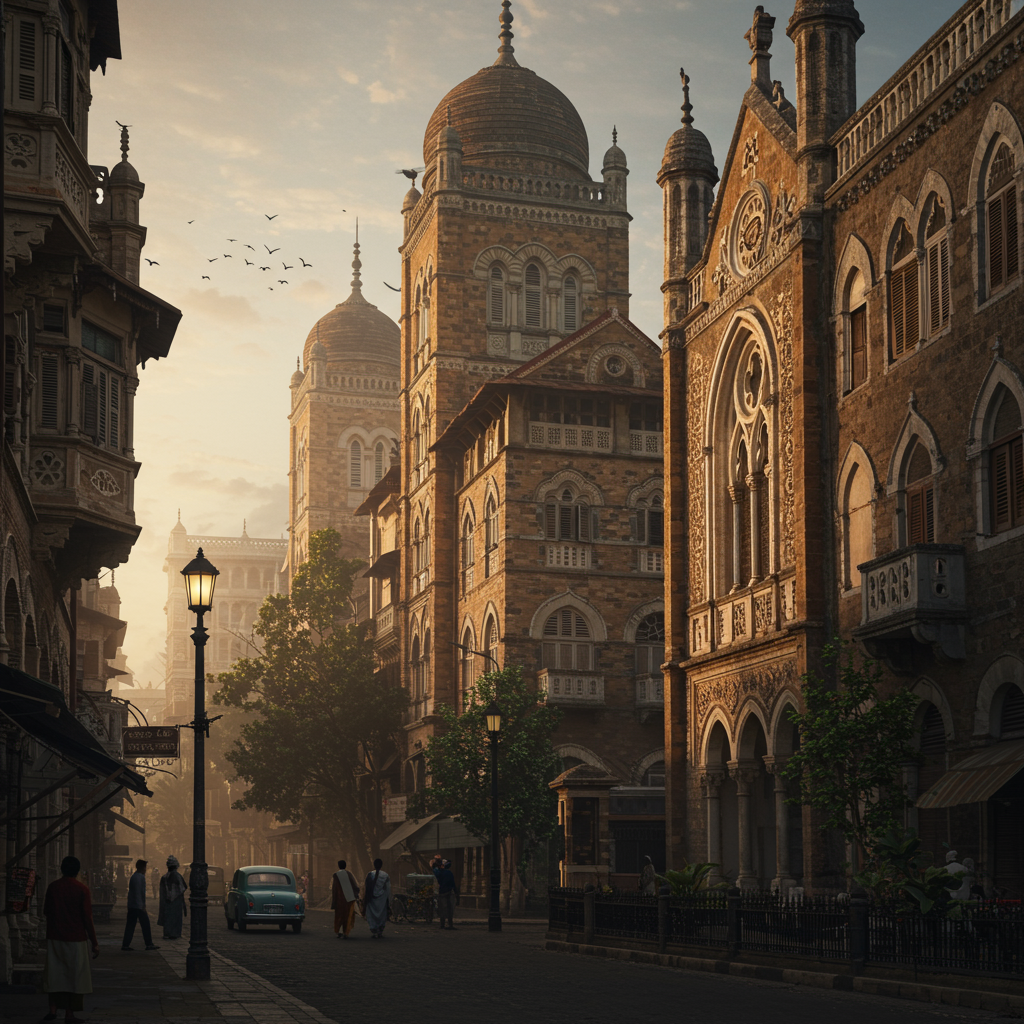
Mumbai, a city pulsating with an irrepressible energy, often reveals its layers to those who choose to delve a little deeper than its modern facade. Beyond the skyscrapers and bustling markets lies a captivating narrative etched in stone and iron, a testament to its colonial past. Embarking on one of Mumbai’s renowned heritage walks is akin to stepping into a living museum, where every building has a story, and every street whispers tales of yesteryear.
The heart of colonial Mumbai, undoubtedly, beats strongest in the Fort precinct. This historic area, once the fortified nucleus of the British settlement, is a treasure trove of architectural marvels. Our journey often begins near the iconic Gateway of India, a grand arch overlooking the Arabian Sea, built to commemorate the visit of King George V and Queen Mary. Nearby stands the majestic Taj Mahal Palace Hotel, an architectural masterpiece that has witnessed over a century of Mumbai’s history, a symbol of opulence from the British Raj era.
As you stroll through the wide avenues, the grandeur of the Victorian Gothic architecture is unmistakable. A prime example is the awe-inspiring Chhatrapati Shivaji Maharaj Terminus, formerly known as Victoria Terminus. This UNESCO World Heritage Site is not just a railway station but an elaborate cathedral of commerce, adorned with intricate carvings, gargoyles, and domes, a true testament to the Indo-Saracenic and Gothic Revival styles.
Further along, the legal and academic bastions of the British era stand tall. The magnificent Bombay High Court, with its towering spires and ornate carvings, continues to dispense justice in a building that could easily be mistaken for a European cathedral. Adjacent to it, the University of Mumbai campus beckons, featuring the stunning Rajabai Clock Tower, modelled on Big Ben, and the elegant Convocation Hall, both showcasing intricate stained-glass windows and Gothic grandeur.
The walk often leads to Flora Fountain, now officially Hutatma Chowk, a beautiful sculptural fountain depicting the Roman goddess Flora. This landmark served as a central meeting point during the colonial era and remains a vibrant hub, surrounded by stately buildings that housed banks, offices, and trading companies. The sheer scale and architectural detail of these structures offer a glimpse into Mumbai’s past as a crucial trading port and administrative centre of the British Empire.
Exploring these areas is not just about observing buildings; it’s about understanding the city’s evolution, the lives of those who walked these streets centuries ago, and the indelible legacy left by the British. From the bustling Ballard Estate, with its European-style architecture, to the quaint lanes of Colaba, each step on a heritage walk in Mumbai is a step back in time, offering a profound appreciation for the city’s rich, layered history. It’s an essential experience for any traveller keen to connect with the soul of this incredible metropolis.