
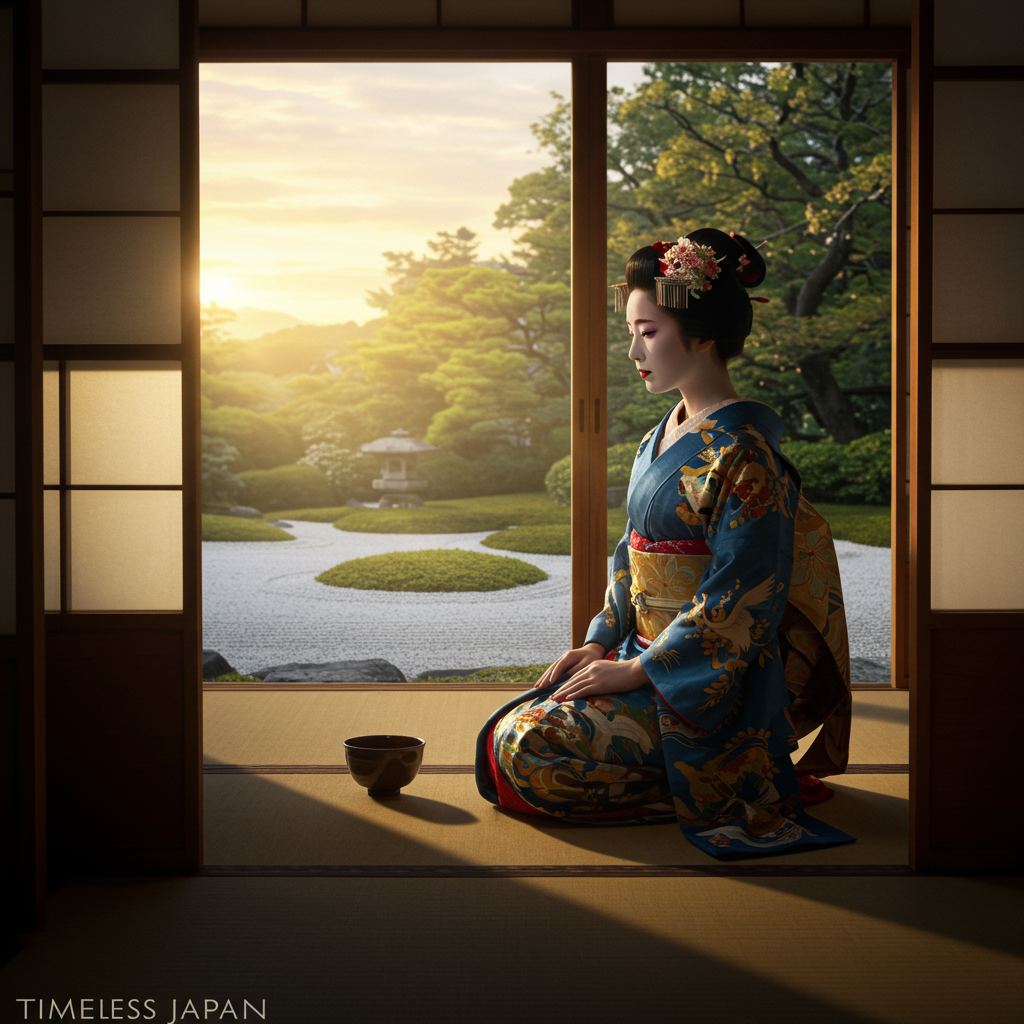
Stepping into traditional Japan is like entering a living, breathing work of art, a place where ancient rituals and profound philosophies continue to shape daily life. My recent journey offered a truly immersive experience, delving into the serene beauty of tea ceremonies, the captivating artistry of Geishas, and the tranquil contemplation offered by Zen gardens.
🍵 The Meditative Grace of the Tea Ceremony
My first encounter with Japan’s rich cultural tapestry began with a traditional tea ceremony in Kyoto. The precise, graceful movements of the host, the tranquil atmosphere of the tea house, and the deliberate preparation of the matcha tea were mesmerising.
It wasn’t just about drinking tea; it was a meditative dance, an embodiment of ichigo ichie – “one time, one meeting” – appreciating the transient nature of the moment. Every gesture, from the unfolding of the silk cloth to the whisking of the vibrant green powder, spoke of mindfulness and respect, leaving me with a profound sense of inner calm.
🎭 The Fleeting Elegance of Gion’s Geisha
Later, wandering through the historic streets of Gion, Kyoto’s renowned Geisha district, I was fortunate enough to witness the fleeting elegance of a Geisha (or Geiko, as they are known locally).
These extraordinary artists are not merely entertainers but custodians of traditional Japanese performing arts, excelling in music, dance, and conversation. Attending a private performance was an unforgettable privilege. The intricate kimonos, the delicate make-up, and the captivating dance movements told stories without words, showcasing centuries of refined artistry and cultural heritage. It was a poignant reminder of the dedication required to preserve such unique traditions.
🧘 Contemplation in Zen Gardens
The journey into Japan’s soul culminated in the peaceful embrace of its Zen gardens. These meticulously crafted landscapes, designed for meditation and contemplation, are masterpieces of minimalist beauty.
The rock garden at Ryoan-ji, with its fifteen carefully placed stones amidst raked gravel, invited endless interpretation and reflection. Similarly, the moss gardens and tranquil ponds of temples like Ginkaku-ji (the Silver Pavilion) offered a sanctuary from the bustling world, encouraging a deep connection with nature and one’s inner self. Each garden felt like a philosophical statement, urging visitors to slow down, observe, and find peace in simplicity.
Experiencing these pillars of traditional Japanese culture – the thoughtful tea ceremony, the exquisite artistry of the Geishas, and the contemplative beauty of Zen gardens – wasn’t just sightseeing; it was a profound immersion. It offered a rare glimpse into a timeless world where beauty, discipline, and spirituality intertwine, leaving an indelible mark on the heart and mind.