
Sri Lanka, often hailed as the pearl of the Indian Ocean, is rnowned globally for its pristine beaches, lush tea plantations, and vibrant culture. However, beneath this picturesque surface lies a profound historical legacy, etched into the very landscape. For history buffs and cultural explorers alike, a journey into the island’s ancient cities of Anuradhapura and Polonnaruwa is an absolute must, offering an unparalleled glimpse into the grandeur of past Sinhalese civilisations.
Stepping Back in Time at Anuradhapura
Our historical odyssey begins in Anuradhapura, the venerable first capital of Sri Lanka. As a UNESCO World Heritage site, it served as the political and religious centre of the island for over 1,300 years, from the 4th century BC to the 11th century AD. This sprawling ancient city offers a vast array of magnificent ruins that whisper tales of bygone eras.
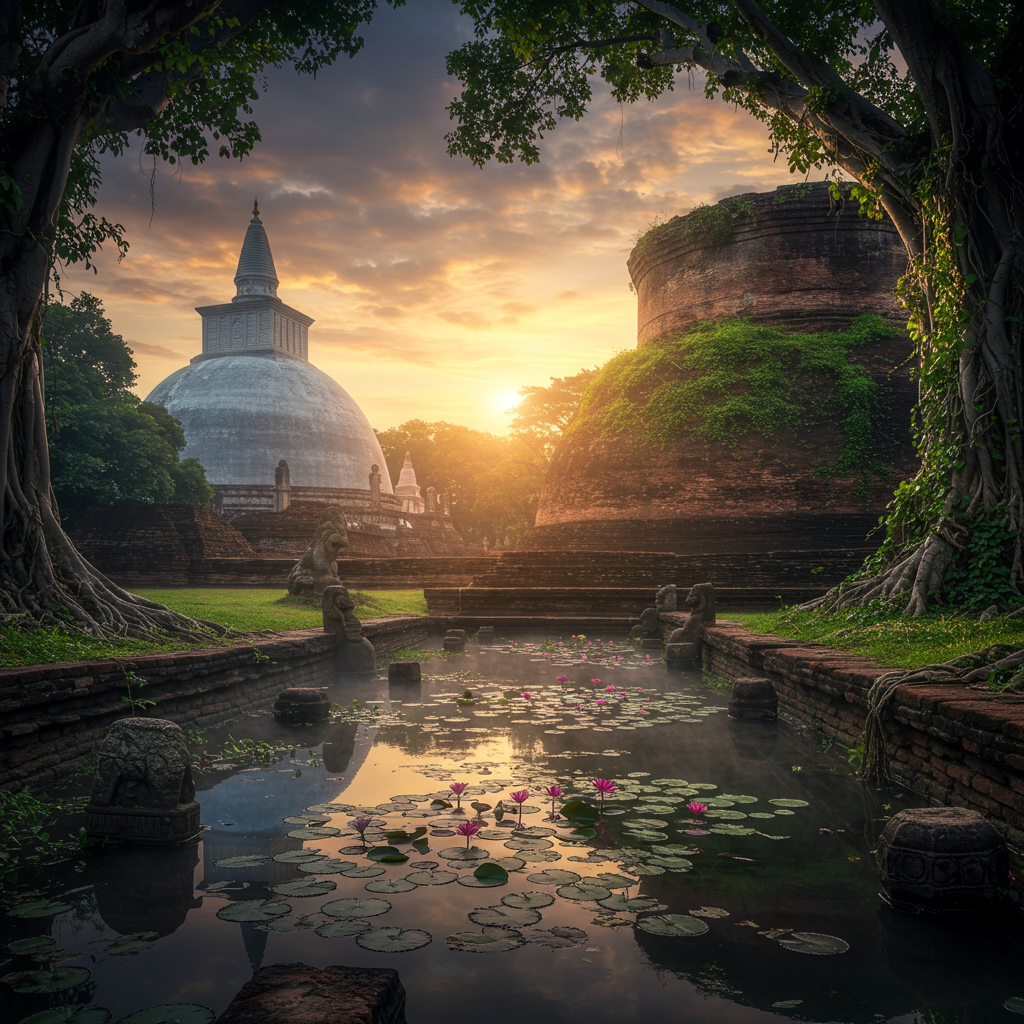
The skyline of Anuradhapura is dominated by colossal dagobas (stupas), testaments to ancient engineering prowess and deep spiritual devotion. The pristine white dome of Ruwanwelisaya, glowing majestically, particularly at sunset, is a sight to behold, often bustling with pilgrims. Equally impressive are the towering red-brick structures of Jetavanaramaya and Abhayagiriya, once among the tallest man-made structures in the ancient world. Each tells a unique story of monastic life and royal patronage.
The spiritual heart of Anuradhapura, however, lies in the sacred Sri Maha Bodhi tree. Believed to be grown from a cutting of the original Bodhi tree in India under which Buddha attained enlightenment, it is one of the oldest living human-planted trees in the world, revered by Buddhists worldwide. A visit here is a deeply moving experience. Don’t miss the serene rock-cut pool and exquisite sculptures at Isurumuniya Temple, adding another layer of artistic beauty to this ancient marvel.
The Medieval Splendour of Polonnaruwa
From the ancient grandeur of Anuradhapura, we journey east to Polonnaruwa, Sri Lanka’s second ancient capital. After the decline of Anuradhapura, Polonnaruwa rose to prominence in the 11th century, flourishing for approximately two centuries under powerful kings like Parakramabahu I and Nissanka Malla. This UNESCO World Heritage site, though more compact than Anuradhapura, offers remarkably well-preserved ruins, showcasing a different architectural and artistic style.
Exploring Polonnaruwa often feels like walking through an open-air museum. The Royal Palace complex, with its remnants of a seven-storey palace, evokes images of a bustling royal court. The iconic Quadrangle (also known as the Dalada Maluwa) is a concentrated cluster of some of the most impressive structures, including the stunning circular Vatadage, the elegant Thuparama Gedige, and the exquisite moonstone steps. Each structure here is a masterpiece of medieval Sinhalese craftsmanship.
Perhaps the most famous carvings in Polonnaruwa are found at Gal Vihara, where four colossal Buddha statues – a seated figure, a standing figure, and two reclining figures – are carved directly out of a single large granite rock face. The serene expressions and intricate details are truly awe-inspiring. Cycling is a popular and highly recommended way to explore Polonnaruwa‘s vast complex, allowing for a leisurely immersion into its historical landscape.
A Tale of Two Cities
While both Anuradhapura and Polonnaruwa offer incredible insights into Sri Lanka’s glorious past, they each possess a distinct character. Anuradhapura, with its vast dagobas and sprawling monasteries, exudes a sense of ancient spiritual vastness and timeless devotion. Polonnaruwa, on the other hand, presents a more concentrated and intricately detailed picture of medieval Sinhalese artistry, urban planning, and sophisticated hydraulic engineering. Visiting both provides a comprehensive and enriching understanding of the evolution of Sri Lankan civilisation and its architectural prowess.
A journey to these ancient cities is more than just a sightseeing trip; it’s an immersive experience into a living history, where every stone has a story to tell. Be prepared to be captivated by the majesty and enduring spirit of Sri Lanka’s ancient kingdoms.