
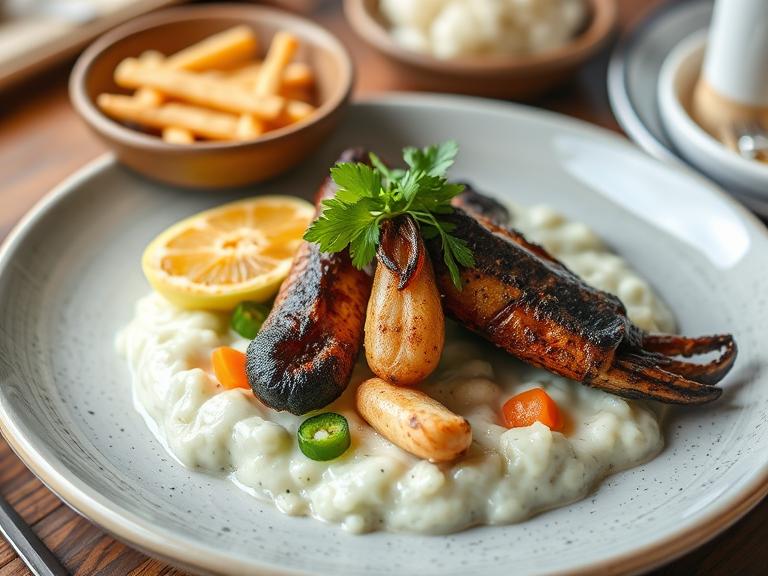
Icelandic cuisine offers a unique array of local specialties deeply rooted in the island’s natural resources and traditional preservation methods, with a strong emphasis on lamb and seafood. Exploring these tastes gives visitors a genuine experience of Iceland’s culinary heritage.
Traditional Lamb Dishes
Lamb is a cornerstone of Icelandic food culture, largely due to the country’s extensive sheep farming. One classic preparation is Hangikjöt, or smoked lamb, where the meat is traditionally hung and smoked to preserve it and intensify its flavour. Commonly served during festive seasons, especially Christmas, this smoky, tender meat is typically boiled and paired with sides such as boiled potatoes, red cabbage, green peas, and rye flatbread, known as flatbrauð.
Seafood Delights
Surrounded by rich fishing waters, Iceland relies heavily on fish and seafood. Popular fish include cod, haddock, wolffish, and Atlantic salmon. One traditional favourite is Plokkfiskur, a creamy fish stew made with white fish, potatoes, onions, flour, and milk, often served with dense rye bread and butter. The stew combines subtle flavours to give a hearty, comforting meal rooted in Iceland’s fishing traditions.
Harðfiskur is another iconic delicacy—dried fish jerky made from cod, haddock, or wolffish. It has been a staple snack for centuries, prized for its high protein content and distinct texture. Traditionally dried in the cold Icelandic winds, it is eaten plain or with salted butter, sometimes enjoyed alongside a schnapps called Brennivín.
Atlantic wolffish, notable for its firm white flesh and sweet, crab-like taste, is typically grilled and served fresh, offering a rarer but cherished dish in Iceland’s seafood repertoire. Langoustines, locally known as Humar, are caught near the south coast and prepared in grilled, fried, or baked forms, prized for their tender and flavoursome meat.
Unique Traditional Specialties
No exploration of Icelandic cuisine is complete without sampling Hákarl, the country’s national dish made from fermented Greenland shark. Though intense in flavour and aroma, it represents an ancient preservation technique and is often consumed during mid-winter festivals with the accompaniment of the traditional spirit Brennivín.
Accompanying these are other staples like rúgbrauð, a sweet, dense rye bread traditionally baked in geothermal heat underground, providing a distinctive taste and texture that’s perfect alongside butter or smoked fish.
Contemporary Icelandic Food Culture
Modern Icelandic chefs blend these traditional ingredients with international influences to create innovative dishes, yet the foundation remains clearly tied to the island’s land and sea. For travellers, indulging in local restaurants or cafés offers an authentic taste of Icelandic nature, history, and culture, whether in a creamy fish stew or a crisp, freshly grilled wolffish fillet.
Sampling Icelandic cuisine is not just about food; it is a journey into the country’s rugged environment and survival through centuries of resourcefulness.
Enjoy your Icelandic culinary adventure.