
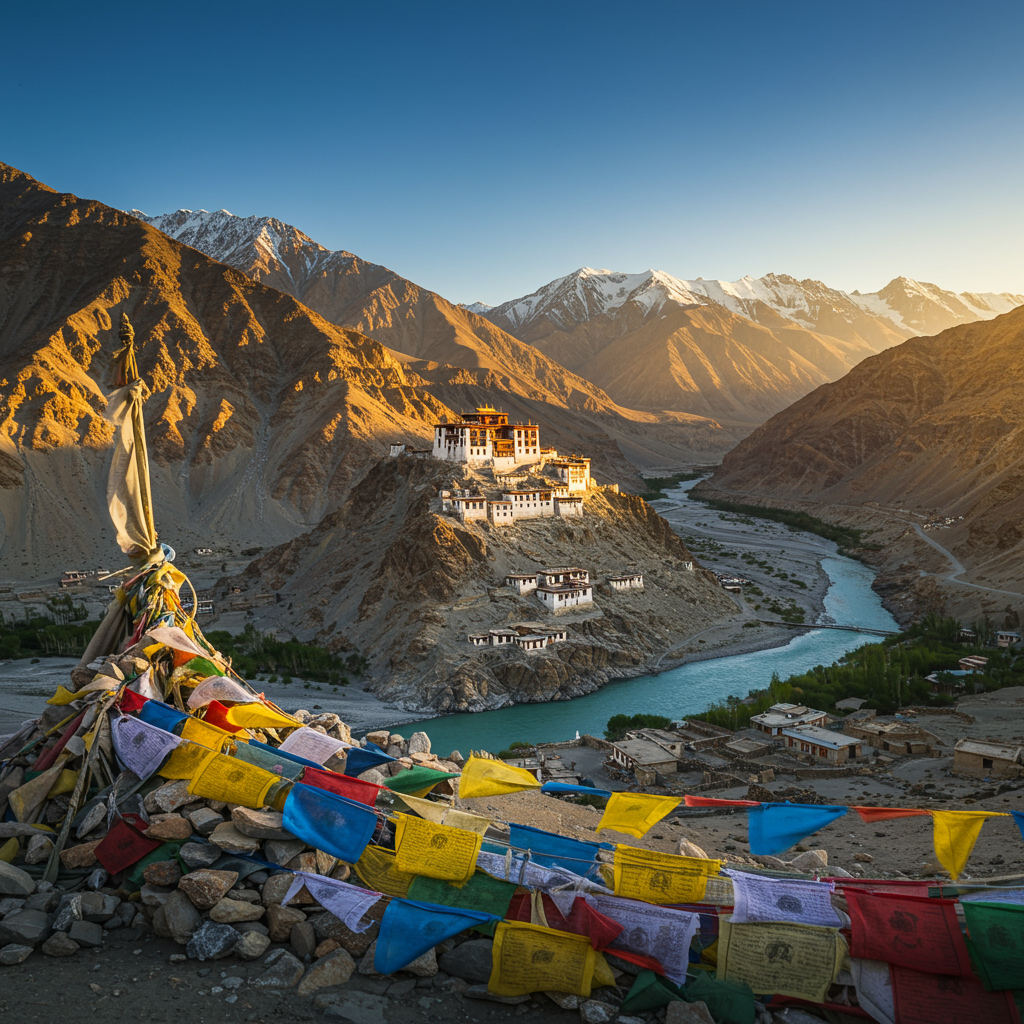
While Himachal Pradesh often conjures images of bustling hill stations and verdant valleys, there exists a realm within its rugged embrace that remains largely untouched by mainstream tourism. This is the mystical Spiti Valley, a high-altitude desert region in the northeastern part of the state, bordering Tibet. Often referred to as ‘Little Tibet’, Spiti offers an experience that is as profound as it is visually arresting – a journey into a land of stark, raw beauty, ancient Buddhist culture, and a pace of life that hums with the rhythm of the mountains.
The journey to Spiti itself is an adventure. Whether you choose the route via Manali, traversing the formidable Rohtang Pass and Kunzum Pass, or the equally challenging path from Shimla through Kinnaur Valley, the ever-changing landscape is a spectacle. From lush green forests, the terrain gradually transforms into a barren, moon-like expanse of towering, erosion-sculpted mountains, deep river gorges, and winding roads that cling precariously to cliff faces. It’s a testament to the raw power of nature and an immediate indicator that you are entering a truly unique corner of the world.
The heart of Spiti Valley is Kaza, a small town serving as its administrative and commercial centre. From here, one can embark on explorations to some of the most iconic and remote villages. Dominating the landscape is the magnificent Key Monastery (also spelt Ki), perched majestically atop a conical hill, an architectural marvel and a spiritual beacon for centuries. Its white-washed walls and colourful prayer flags stand in beautiful contrast to the desolate surroundings, offering breathtaking panoramic views of the valley below. Equally impressive are the ancient monasteries of Dhankar and Tabo, the latter a UNESCO World Heritage Site, housing murals and stuccoes that date back over a thousand years.
Beyond the monasteries, Spiti is dotted with villages that each hold a unique charm. Imagine sending a postcard from the world’s highest post office in Hikkim, or savouring a cup of tea in Komic, often cited as the highest motorable village in Asia. In Langza, a giant statue of Buddha overlooks the valley, while the village is also famous for its marine fossils, remnants of a time when Spiti lay submerged under the Tethys Sea. The sense of history, both geological and cultural, is palpable everywhere you go.
Nature’s masterpieces abound in Spiti. The glistening turquoise waters of Chandratal Lake, also known as the Moon Lake, are a sight to behold, reflecting the dramatic peaks that surround it under an unbelievably clear sky. Night-time in Spiti is an astronomer’s dream, with virtually no light pollution, allowing for an unobstructed, dazzling display of the Milky Way and countless stars. The air is crisp, the silence profound, broken only by the whispers of the wind.
What truly completes the Spiti experience, however, are its people. The Spitians, predominantly Buddhists, are resilient, warm, and welcoming. Their distinctive culture, traditions, and simple way of life are deeply intertwined with the harsh environment. Homestays offer an incredible opportunity to immerse oneself in their daily routines, savour traditional cuisine, and understand the profound spiritual connection they share with their land. It’s an opportunity to connect, to learn, and to be humbled by their fortitude and hospitality.
Spiti Valley is not just a destination; it’s a journey into a different dimension of travel. It challenges, it inspires, and it leaves an indelible mark on the soul. For those yearning to escape the ordinary and discover a landscape that feels both ancient and otherworldly, Spiti’s rugged beauty awaits, promising an adventure that will forever alter your perception of Himachal and, perhaps, of yourself.