
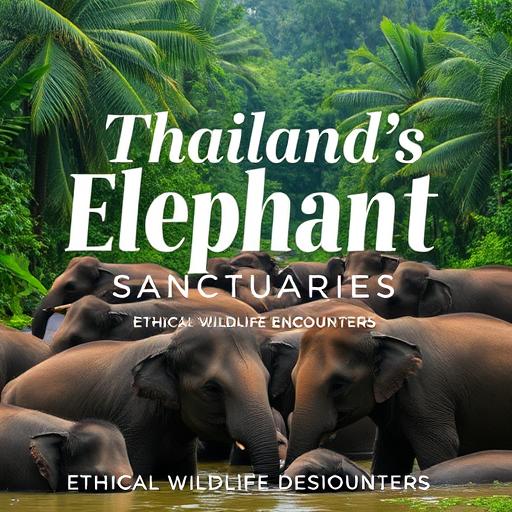
Thailand’s elephant sanctuaries represent a profoundly ethical approach to wildlife tourism, focusing on the rescue, rehabilitation, and respectful treatment of elephants rather than exploitation. These sanctuaries reject outdated practices such as elephant riding or performances, offering visitors an opportunity to connect with these majestic animals in a way that honours their natural behaviours and well-being.
One pioneering example is the Elephant Nature Park in Northern Thailand. Founded by the renowned advocate Saengduean Chailert (nicknamed Lek), this sanctuary provides a refuge for elephants who have suffered from street begging, logging, and circus abuse. Here, elephants live freely in a natural environment, where visitors can participate in feeding, grooming, and learning about elephant care in a gentle, hands-off manner that allows the animals to express their natural behaviours peacefully.
Further south, the Elephant Hills in the renowned Khao Sok National Park offers a unique encounter without riding. Guests can watch elephants bathing in mud pools, feeding, and roaming freely, reflecting the sanctuary’s commitment to animal welfare. Their award-winning programme also emphasises conservation education, allowing tourists to witness first-hand how rescued elephants are integrated into their natural jungle habitat.
On the island of Phuket, the Phuket Elephant Sanctuary serves as a final home for retired working elephants. Set amidst tropical jungle near the Khao Prae Teao National Park, visitors observe the elephants foraging, socialising, and bathing without any forced interaction. This sanctuary also offers guided canopy walkway tours, enriching the ethical experience by combining wildlife observation with forest education.
Ethical sanctuaries across Thailand share common principles: no riding, no performances, no baby elephant petting, and no separation from mothers. They prioritise environments where elephants can roam, forage, and socialise naturally, with strict limits on human contact to prevent stress. These sanctuaries also promote safety for both visitors and animals, avoiding harmful tools or training methods.
For travellers seeking meaningful wildlife encounters, these sanctuaries provide respectful alternatives to exploitative tourism. By choosing such ethical experiences, visitors contribute to the conservation of Thailand’s elephants and the preservation of natural habitats, while deepening their understanding of these incredible creatures in a compassionate, responsible manner.