
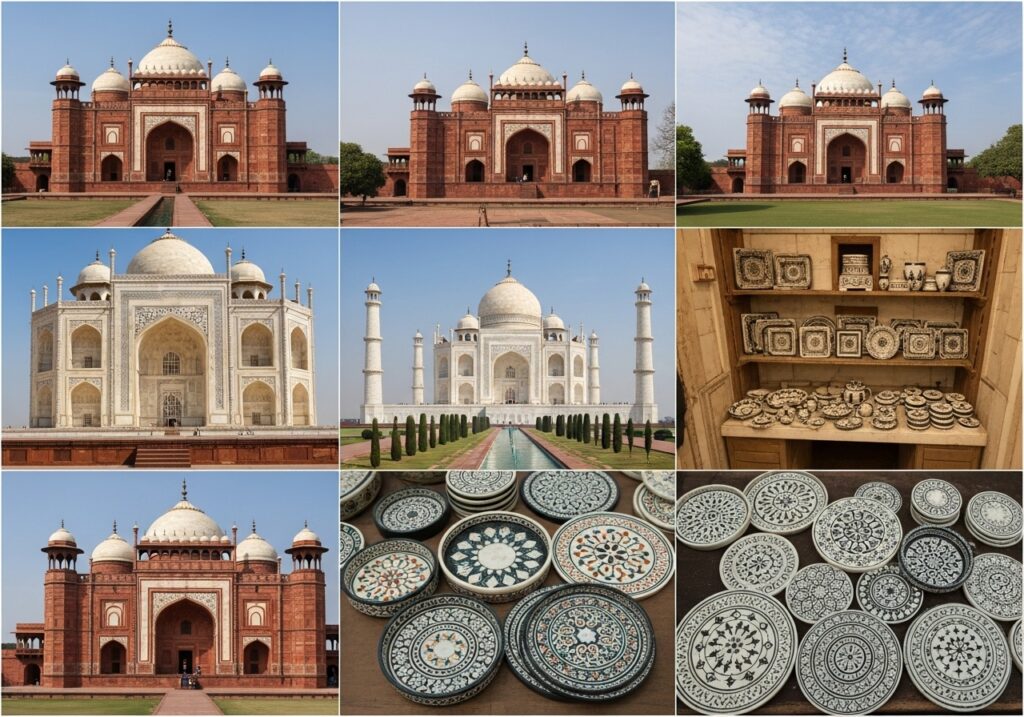
Agra is world-renowned for the Taj Mahal, but this historic city offers a wealth of fascinating experiences beyond its iconic mausoleum. A deeper delve into the city’s Mughal heritage and its thriving local crafts scene reveals layers of history and artistry that enchant any discerning traveller.
The heart of Mughal legacy in Agra lies in its formidable forts and palaces. The majestic Agra Fort, commissioned by Emperor Akbar in the mid-16th century, is a sprawling fortress of red sandstone perched on the banks of the Yamuna River. This architectural marvel not only served as a royal residence but also a military base, showcasing a blend of Hindu, Persian, and Islamic styles. Inside, you can wander through beautifully ornate halls such as the Diwan-i-Khas (Hall of Private Audience), the elegant marble Khas Mahal built by Shah Jahan, and quiet courtyards including Anguri Bagh, which once sheltered the emperor’s harem. The fort’s layered architecture narrates the evolution of Mughal design and power—a city within a city.
Just a short journey from Agra lies Fatehpur Sikri, an enchanting abandoned city built by Akbar. This UNESCO World Heritage site exhibits a harmonious blend of Islamic, Persian, and indigenous Indian architectural elements. The imposing Buland Darwaza, or “Gate of Victory,” dominates the skyline, welcoming visitors into courtyards and palatial complexes that once buzzed with royal activities. Fatehpur Sikri remains a testament to Akbar’s vision of imperial grandeur and cultural synthesis.
Beyond the grand monuments, Agra also thrives with rich artisanal traditions. The city is famed for its intricate marble inlay work, a craft perfected during the Mughal period and still alive in numerous workshops. This delicate art, known as pietra dura, decorates everything from jewellery boxes to tabletops, drawing travellers into bustling bazaars where skilled artisans carve stones like lapis lazuli, jasper, and onyx into floral and geometric motifs.
Equally captivating is the production of zardozi embroidery—luxurious metallic thread work historically used to adorn royal garments. Local craftsmen continue this heritage, creating stunning textiles that reflect Mughal patterns and motifs, perfect for those seeking authentic souvenirs.
Exploring markets such as the Kinari Bazaar offers a sensory immersion into Agra‘s vibrant craft culture, with shops featuring leather goods, carpets, and fine handicrafts rooted in centuries-old traditions. These crafts not only preserve the city’s artistic legacy but also support the livelihoods of skilled artisans keeping history alive.
For travellers eager to venture beyond the Taj Mahal’s gleaming marble, Agra invites exploration of its formidable fortresses, mesmerising ruins, and thriving handcraft scenes. This multifaceted city embodies the splendour of the Mughal era while nurturing vibrant contemporary creativity.
Whether tracing the footsteps of emperors or discovering exquisite handmade treasures, Agra promises an enriching journey through history and art.